Menopur vs Gonal-F: Key Differences in IVF Stimulation Medications

Quick answer: Menopur vs Gonal-F
Menopur and Gonal-F are both effective stimulation medications that work to recruit multiple mature eggs during IVF or Egg Freezing.
Gonal-F provides recombinant follicle-stimulating hormone (FSH) only, while Menopur provides both FSH and luteinizing hormone (LH) activity.
Neither medication is universally better. IVF success depends on patient age, ovarian response, monitoring, and protocol design rather than medication brand.
Menopur and Gonal-F are commonly used during IVF to stimulate the ovaries to produce multiple eggs in a single cycle. By increasing the number of eggs available for retrieval, the chances of fertilization, embryo development, and pregnancy can improve.
While they share the same overall goal, Menopur and Gonal-F differ in hormonal composition, mechanism of action, and how they are used within IVF protocols. The choice between them is individualized based on patient biology, diagnosis, and prior response to stimulation.
Menopur vs Gonal-F: Side-by-Side Comparison
Below is a high-level comparison of Menopur and Gonal-F, including composition, source, and typical use in IVF stimulation protocols.
|
Feature |
Menopur |
Gonal-F |
|
Hormonal activity |
FSH + LH |
FSH only |
|
Medication type |
Human menopausal gonadotropin (hMG) |
Recombinant FSH (rFSH) |
|
Source |
Purified urinary-derived |
Laboratory-produced |
|
LH activity included |
Yes |
No |
|
Primary role in IVF |
Develop multiple mature eggs |
Develop multiple mature eggs |
|
Typical use |
When LH support may be beneficial |
When FSH-only stimulation is sufficient or LH is provided elsewhere
|
|
Can be combined with other meds |
Yes |
Yes |

Why Ovarian Stimulation Medications Matter in IVF
During a typical menstrual cycle, only a single follicle reaches full maturity. IVF relies on ovarian stimulation medications to intentionally alter this process, encouraging the ovaries to develop multiple mature follicles at the same time.
Producing multiple eggs in a controlled manner increases the number of eggs available for retrieval, fertilization, and embryo development, which improves the ability to select viable embryos for transfer or freezing.
Follicle-stimulating hormone (FSH) is the key driver of this response. FSH acts on granulosa cells within the follicle to support growth and final egg maturation.
Both Menopur and Gonal-F provide this essential stimulation, though they differ in hormonal composition and how that stimulation is delivered.
What Is Gonal-F?
Gonal-F (follitropin alpha) is a recombinant follicle-stimulating hormone (rFSH) medication. It contains FSH only and does not provide LH activity.
As detailed in our standalone Gonal-F article, Gonal-F is used to:
- Stimulate the ovaries to produce multiple follicles during IVF
- Induce ovulation in women with irregular or absent ovulation
- Support egg freezing cycles
- Treat male infertility by inducing spermatogenesis in select cases
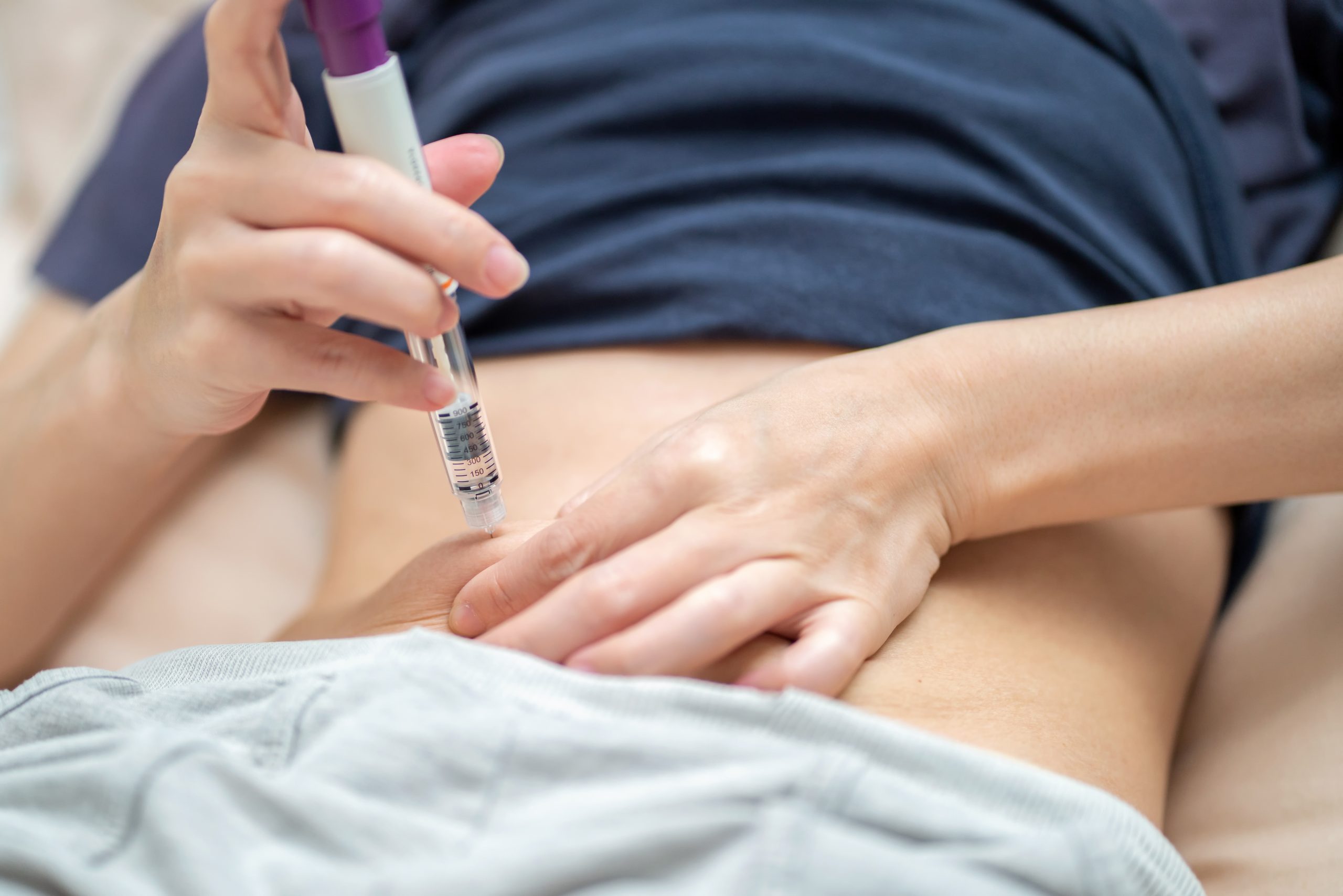
Gonal-F is commonly administered using a multi-dose pen (Gonal-F RFF Redi-ject), allowing precise dose adjustment and ease of use.
What Is Menopur?
Menopur (menotropins for injection) is a human menopausal gonadotropin (hMG) derived from highly purified urine of postmenopausal women. Each vial contains 75 IU of FSH activity and 75 IU of LH activity.
Menopur is FDA-approved for ovarian stimulation in IVF and provides both FSH and LH activity in a single medication.
The Core Difference: FSH-Only vs FSH + LH
Gonal-F: FSH-Only Stimulation
Gonal-F delivers consistent FSH signaling to promote follicle growth and increase the number of eggs available for retrieval. It does not directly provide LH activity during stimulation.
Menopur: Combined FSH and LH Activity
Menopur provides FSH to stimulate follicle growth and LH activity to support steroid hormone production within the follicle and later stages of follicular development. For some patients, LH activity may better mirror natural ovarian physiology.
Is Menopur or Gonal-F Better for IVF?
Neither Menopur nor Gonal-F is universally better for IVF.
Clinical evidence, including meta-analyses and Cochrane reviews comparing human menopausal gonadotropins (Menopur) with recombinant FSH (Gonal-F), shows no consistent difference in pregnancy or live birth rates at the population level when stimulation protocols are appropriately designed.
IVF success depends more on a patient’s age and medical profile, ovarian response, careful monitoring, and overall protocol design than on which stimulation medication is used.
Some studies and clinical experience suggest that added LH activity may be beneficial for certain patient populations. However, this benefit is not universal, and Menopur should not be assumed to improve egg quality or outcomes by default.
In general:
- Menopur may be preferred when added LH activity is expected to support follicular development
- Gonal-Fis is often sufficient when FSH-only stimulation produces an adequate response
- When LH activity is needed, it can also be provided through alternative approaches—such as low-dose hCG—rather than relying on Menopur alone
Rather than choosing a “better” medication, fertility specialists select or combine stimulation medications to match the patient’s biology, prior response, and treatment goals.
Can Menopur and Gonal-F Be Used Together?
Yes. Many IVF protocols combine Menopur and Gonal-F to fine-tune the balance of FSH and LH activity.
Common approaches include:
- Gonal-F as the primary FSH driver
- Menopur added to introduce LH activity
- Dose adjustments based on real-time ovarian response
This allows stimulation to be individualized rather than relying on a single medication strategy.
Gonal-F + Low-Dose hCG (An Alternative to Menopur)
In some IVF stimulation protocols, Gonal-F is paired with low-dose human chorionic gonadotropin (hCG) to provide LH-like activity instead of using Menopur. Because hCG activates the same LH receptor, it can deliver functional LH support during ovarian stimulation.
Although hCG is not identical to luteinizing hormone, its biological activity at the ovarian level overlaps with LH and has been widely used in IVF protocols for decades. When combined with Gonal-F, low-dose hCG can help support follicular development in patients who may benefit from added LH activity.
This approach is sometimes considered for patients who require LH support but are seeking a more cost-conscious alternative to Menopur, particularly in self-pay cycles or when insurance coverage for medications is limited.
As with all stimulation strategies, the decision to use Menopur, Gonal-F alone, or Gonal-F with low-dose hCG is based on ovarian response, hormone levels, prior cycle outcomes, and overall clinical goals—not cost alone.
Side Effects of Menopur and Gonal-F
Menopur and Gonal-F have similar side-effect profiles because both medications stimulate the ovaries in similar ways. Most side effects are mild and related to ovarian stimulation itself rather than the specific medication used.
Common side effects may include:
- Injection site discomfort, redness, or bruising
- Abdominal bloating or pelvic pressure
- Breast tenderness
- Headache or fatigue
- Mood changes related to hormone fluctuations
Less common but more serious risks include:
- Ovarian hyperstimulation syndrome (OHSS)
- Ovarian enlargement or cyst formation
- Multiple follicle development leading to higher-order multiple pregnancy if multiple embryos are transferred
The risk of side effects depends primarily on individual ovarian response, medication dosing, and monitoring, not whether Menopur or Gonal-F is used. Careful ultrasound and hormone monitoring during stimulation allows fertility specialists to adjust dosing and minimize risk.
Limitations of Both Medications
Menopur and Gonal-F:
- Cannot reverse age-related fertility decline
- Do not guarantee embryo development or pregnancy
- Are only one component of IVF success
- Egg quality is primarily influenced by age and genetics.
Cost Differences Between Menopur and Gonal-F
Medication costs are one of the largest variables in the total cost of an IVF cycle. While pricing can vary by pharmacy, dosage, and insurance coverage, Menopur is typically more expensive than Gonal-F on a per-unit basis.
In many standard stimulation protocols:
- IVF cycles using Gonal-F often result in medication costs of roughly $3,000 on average, though totals can certainly be higher or lower depending on dosage and cycle length.
- Protocols that rely heavily on Menopur often average around $4,500 or more in medication costs, again depending on how much Menopur is used during stimulation.
In some protocols, Gonal-F may be paired with low-dose hCG instead of Menopur, which can reduce medication costs for some patients and have a similar effect as Menopur.
Medication costs ultimately depend on the total dose required, not just the medication name. A low-dose protocol using Menopur could cost less than a higher-dose protocol using Gonal-F.
Because stimulation medications are individualized, the most accurate estimate of medication cost usually comes after a treatment protocol is designed and dosing is determined.
Menopur vs Gonal-F: Key Takeaways
- Menopur and Gonal-F are both effective IVF stimulation medications
- Gonal-F provides FSH only; Menopur provides FSH plus LH activity
- Large studies show comparable IVF outcomes at the population level
- Some patients may benefit from LH activity, while others may not
- Medications are often combined to individualize stimulation
- Protocol design and monitoring generally matter more than brand