Embryo Banking: What It Is, Who It’s For, and How Many Embryos to Bank

Quick Answer
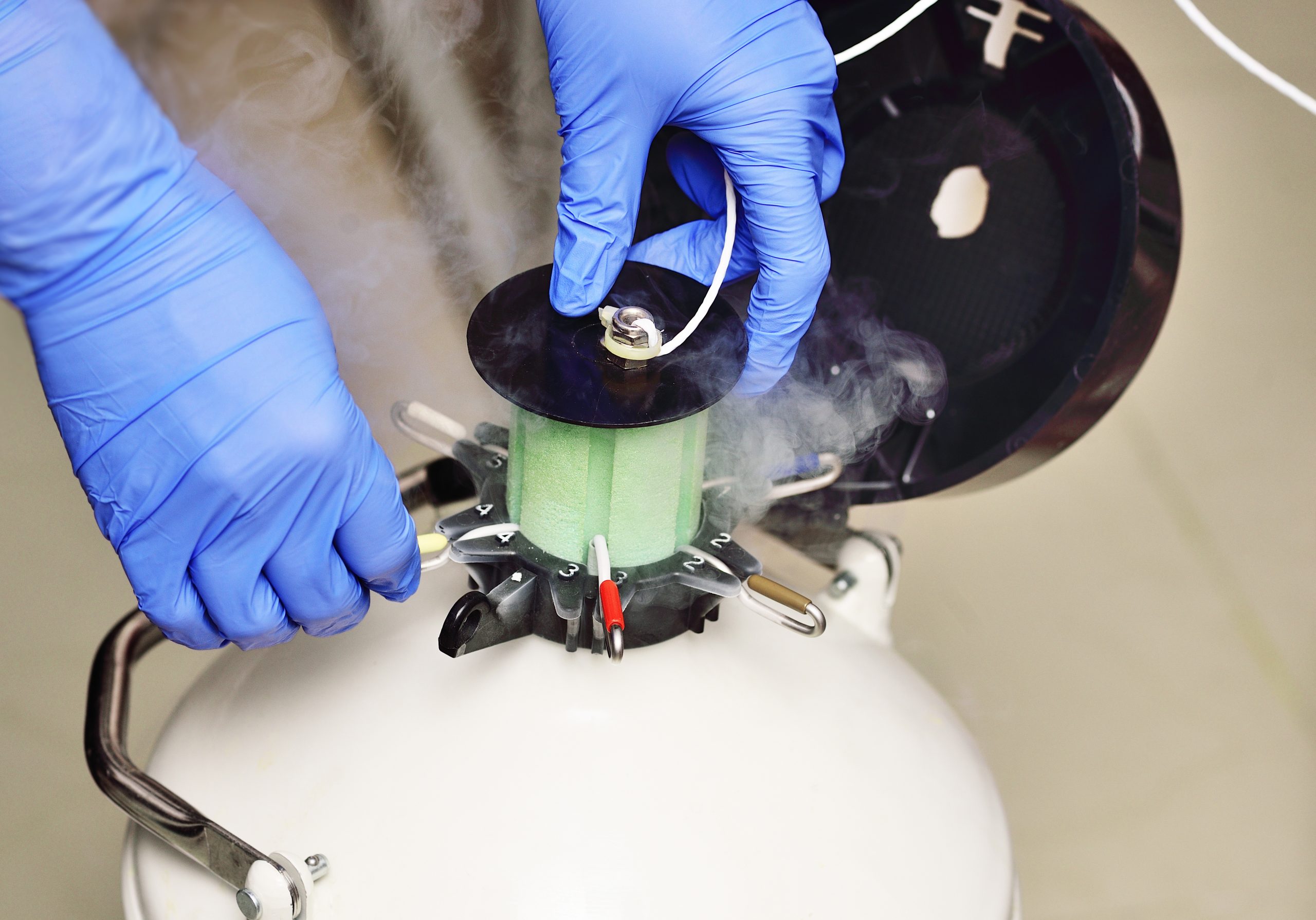
Embryo banking is the process of creating embryos through IVF and freezing them for future use. It can be used as a strategy in which several retrieval cycles are performed consecutively, allowing patients to accumulate more embryos before attempting transfers. Or as a form of long-term fertility preservation, allowing embryos created at a younger age to be used later.

What Is Embryo Banking?
Embryo banking is an IVF strategy in which embryos are created and frozen so they can be used for pregnancy at a later time.
Rather than focusing on becoming pregnant immediately, the goal is to build up a reserve of embryos, giving patients more options and greater flexibility when they’re ready to pursue a transfer.
Embryo banking may be worth considering for:
- Patients with diminished ovarian reserve
- Patients planning for multiple children
- Patients over 35 planning future siblings
- Patients pursuing genetic testing (PGT-A or PGT-M)
- Patients undergoing fertility preservation before medical treatment
Why Patients Choose Embryo Banking
Although the process is the same, patients come to embryo banking for different reasons. Here are the most common.
1. Planning for Multiple Children
This is one of the most common reasons patients choose to bank embryos. Because egg quality declines with age, some patients prefer to create and freeze embryos now so that future siblings can be conceived using embryos made at a younger age.
For example, a patient in their mid-30s who hopes to have two or three children may complete IVF retrieval cycles now and freeze embryos for future pregnancies, rather than returning years later when egg quality may be significantly lower.
2. Coordinating Genetic Testing (PGT)
Patients who plan to use preimplantation genetic testing often find it more practical to complete one or more retrieval cycles and build up a group of embryos before testing them all at once.
This provides a clearer picture of the number of chromosomally normal embryos available and makes transfer planning more straightforward.
Testing multiple embryos together can also be more efficient, both logistically and cost-wise, than testing small batches across separate cycles.
3. Completing Multiple Retrievals While the Ovaries Are Responsive
Some patients respond better to ovarian stimulation when retrieval cycles are performed back-to-back rather than spaced months apart.
Remaining in stimulation mode for several consecutive months can lead to stronger ovarian responses and higher egg yields in individual retrievals.
In some cases, patients who stack cycles see meaningfully more eggs per retrieval than they would with longer gaps between cycles.
This approach can be particularly helpful for:
- Patients with diminished ovarian reserve (DOR)
- Patients who produce fewer embryos per cycle
- Patients over 35
- Patients with a lower ovarian response to stimulation
At CNY Fertility, we work with each patient individually to determine whether consecutive retrievals are likely to improve their outcomes. It’s not the right strategy for everyone, but for patients who respond well to it, the cumulative embryo count can be significantly higher than what a single retrieval would have produced.
4. Long-Term Fertility Preservation
Embryo banking is also used as a form of long-term fertility preservation, where embryos are created now but pregnancy is intentionally planned for the future.
This may apply when cancer treatment is scheduled, when pregnancy will be delayed for personal or medical reasons, or when a patient simply wants to preserve embryos created at a younger age.
When used in this way, the process is sometimes referred to as embryo freezing or embryo cryopreservation.

How Embryo Banking Works
A typical embryo banking cycle includes:
- Ovarian stimulation to encourage multiple eggs to mature
- Egg retrieval to collect eggs from the ovaries
- Fertilization with partner or donor sperm in the laboratory
- Embryo development to day 5 or 6 (blastocyst stage)
- Cryopreservation (freezing) of embryos using vitrification
- Additional retrieval cycles if more embryos are needed
- Frozen embryo transfer (FET) when pregnancy is pursued
Embryos remain frozen until you’re ready to attempt pregnancy. Modern vitrification techniques allow embryos to survive freezing and thawing at very high rates, making embryo storage a reliable foundation for future family building.
What Are the Survival and Success Rates for Banked Embryos?
Understanding what happens to banked embryos after thawing helps set realistic expectations for how many to aim for.
Post-thaw survival: With modern vitrification, the vast majority of frozen embryos survive the thawing process. Studies report post-thaw survival rates of 95% or higher for vitrified blastocysts, compared to significantly lower rates with older slow-freezing methods.
Implantation and live birth: Not every surviving embryo will result in a live birth. For euploid (chromosomally normal) embryos, live birth rates per transfer generally range from 40 to 60% depending on age, embryo quality, and individual factors. This is why most specialists recommend planning for more embryos than you think you’ll need.
The cumulative picture: Embryo banking is most effective when viewed as building a reserve over time. Each additional euploid embryo represents another opportunity. The more embryos you have available, the more transfer attempts you can make, and the higher your overall cumulative chance of success.
Embryo Banking vs. Egg Freezing
Patients often compare embryo banking and egg freezing. They involve the same retrieval process, but serve slightly different purposes.
Embryo Banking
- Eggs are retrieved and fertilized immediately
- Embryos are created and frozen
- Genetic testing can be performed before transfer
- Requires sperm at the time of retrieval
Embryo banking is often the right choice for patients who are in a stable relationship, want multiple children, want information about embryo development now, or plan to use genetic testing.
Egg Freezing
- Eggs are retrieved and frozen unfertilized
- No sperm is required at the time of retrieval
- Fertilization occurs later when you’re ready
- Genetic testing cannot occur until embryos are created
Egg freezing may be preferable if you’re not ready to create embryos yet, don’t currently have a sperm source, or want to preserve your options without making decisions about fertilization.
Neither option is universally better. The right choice depends on your age, relationship status, family-building goals, and personal preferences, and it’s worth talking through with your care team before committing.
How Many Embryos Should I Bank?
There’s no universal answer, and anyone who gives you a definitive number without knowing your full picture is oversimplifying. That said, most fertility specialists use a practical planning framework to guide the conversation.
Planning depends on:
- Your age
- Ovarian reserve (AMH and antral follicle count)
- Desired number of children
- Whether genetic testing will be used
- Personal comfort with cost and additional cycles
A Practical Planning Framework
Many specialists use a general estimate of 2 to 3 euploid embryos per desired child as a starting point. This accounts for the reality that not every embryo transfer results in a live birth, even with chromosomally normal embryos.
As a rough guide:
- One desired child: 2 to 3 euploid embryos
- Two desired children: 4 to 6 euploid embryos
- Three desired children: 6 to 9 euploid embryos
The number of retrieval cycles needed to reach these targets varies considerably depending on age and ovarian response.
- A 32-year-old with good ovarian reserve may reach her embryo goal in one or two cycles.
- A 40-year-old with diminished reserve may need more.
This is why your AMH level and antral follicle count are so important at the planning stage: they help set a realistic expectation for how many embryos a given number of retrievals is likely to produce.
Donor Embryo Bank vs. Embryo Banking
These two terms sound similar but refer to entirely different things.
- Embryo Banking means you create embryos through IVF using your own eggs (or donor eggs you’ve selected) and freeze them for your own future use.
- Donor Embryo Bank refers to a collection of embryos created by other individuals that have been donated to a fertility clinic and made available to recipients.
If you’re researching your options, it’s worth being clear about which one you’re exploring, as the process, cost, and legal considerations differ.
Embryo Banking Cost
The cost of embryo banking depends primarily on how many retrieval cycles are completed before transfer, whether genetic testing is added, and how long embryos are stored. Here’s a simplified comparison:
| Treatment Component | CNY Fertility | National Average |
|---|---|---|
| IVF cycle with medications and monitoring | $7,295 | $19,000 |
| Embryo genetic testing (PGT-A) | ~$2,000 | ~$4,000–$5,000 |
| Embryo storage | $600 per year | ~$1,000 per year |
| Frozen embryo transfer | $1,940 | $6,000 |
If multiple retrieval cycles are performed, costs increase with each cycle. However, banking more embryos across multiple lower-cost retrievals is often more financially accessible at CNY than at clinics with higher per-cycle fees, which is part of why patients from across the country pursue this strategy here.
Frequently Asked Questions
What is embryo banking?
Embryo banking is using the IVF process to create and freeze embryos for future use, rather than attempting pregnancy right away. It gives patients more options and more time.
How many embryos should I bank?
Most specialists recommend planning for 2 to 3 euploid embryos per desired child, though the right number for you depends on your age, ovarian reserve, and family-building goals. Your care team can help you build a realistic plan based on your specific situation.
How many embryos should I bank for two children?
Most patients planning for two children aim for 4 to 6 euploid embryos, though the number needed can vary significantly based on age and how each transfer cycle goes.
How many IVF cycles are usually needed for embryo banking?
It depends on age, ovarian reserve, and how many embryos are created per retrieval. Some patients reach their embryo goals in a single cycle. Others complete multiple retrievals to accumulate enough chromosomally normal embryos for their plans.
Is embryo banking the same as IVF?
They’re closely related but not the same. IVF is the process of creating embryos outside the body. Embryo banking is a strategy in which those embryos are frozen and stored for later use rather than transferred right away.
What survival rates can I expect for frozen embryos?
With modern vitrification, post-thaw survival rates are typically 95% or higher. Not every surviving embryo will result in a live birth after transfer, which is why banking more embryos than you think you’ll need is generally advisable.
How long can embryos stay frozen?
Embryos can remain frozen for many years without significant decline in survival rates when properly stored. Healthy pregnancies have resulted from embryos stored for more than a decade.
The Bottom Line
Embryo banking is a proactive IVF strategy that gives patients more control over their fertility timeline and family-building plans. It’s most valuable when you’re thinking ahead: planning for multiple children, navigating diminished ovarian reserve, preparing for medical treatment, or simply wanting to preserve options while your egg quality is at its best.
The right plan looks different for every patient. At CNY Fertility, we work with you to figure out how many embryos make sense for your goals, whether consecutive retrievals are likely to help your situation, and how to build the most robust embryo reserve possible within a budget that works for you. To learn more, schedule a consultation today.