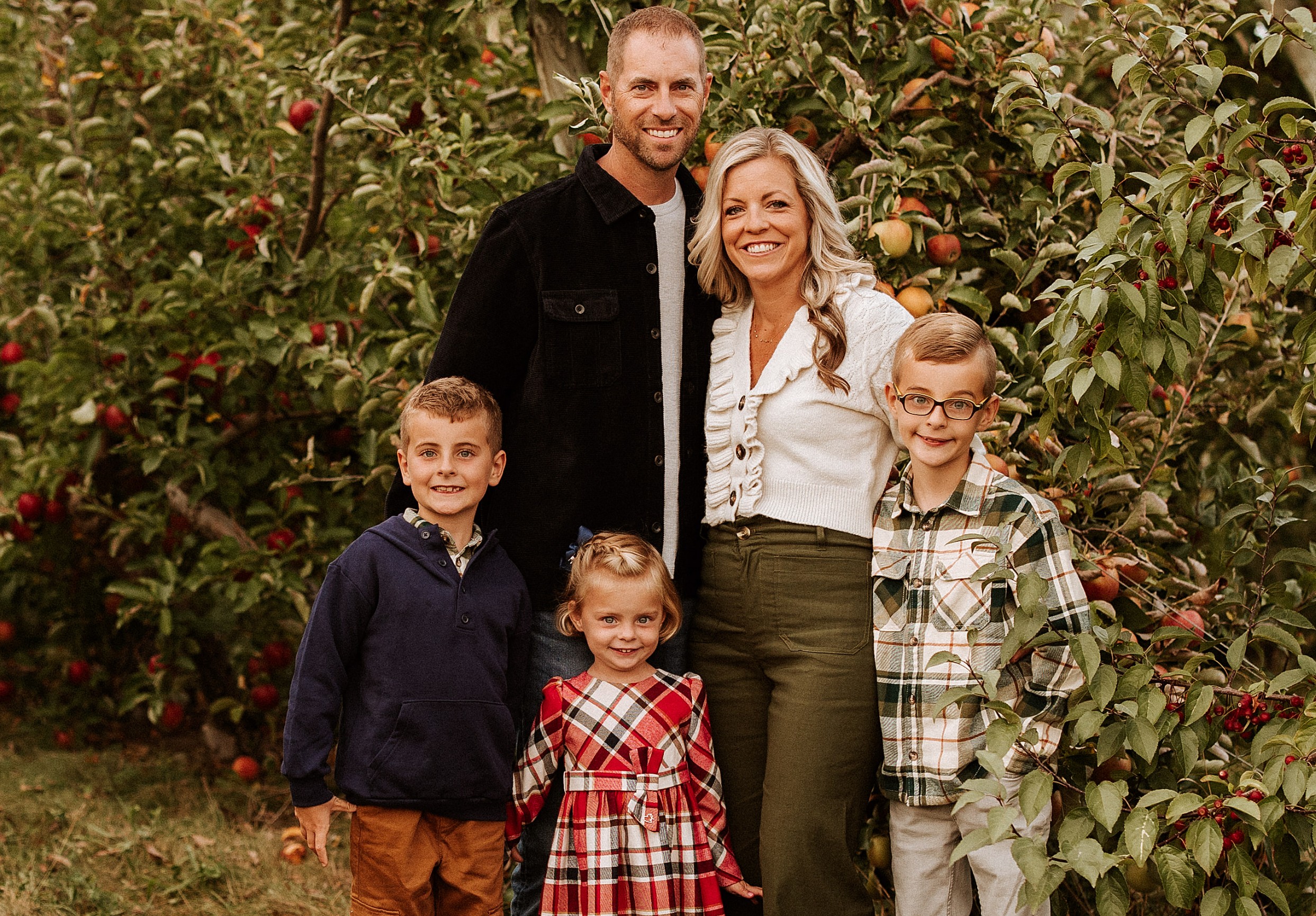
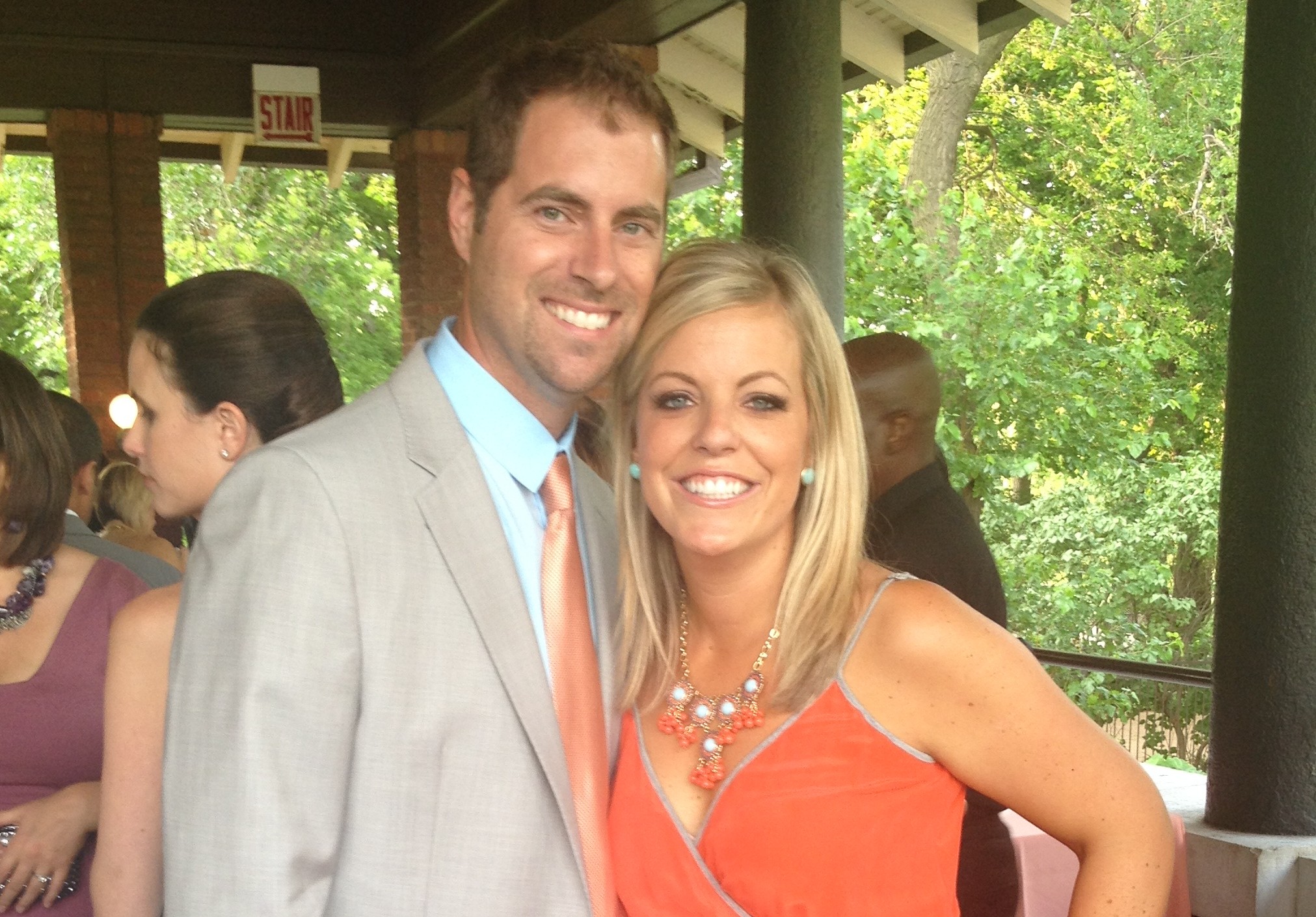
Heather & Brent
Reason for Treatment
-
- Endometriosis
- Recurrent miscarriage
Treatment(s)
-
- In Vitro Fertilization (IVF)
- Frozen embryo transfer (FET)
Provider(s)
-
- David Corley, MD
- Grace Michel, FNP-C
- Robert Kiltz, MD
Treatment Location(s)
-
- CNY Fertility Syracuse
Monitoring Location
-
- Third Party Facility
Heather & Brent's Story:
In the fall of 2010, I married the love of my life, Brent, under trees bursting with autumn leaves. Our wedding pictures show our young faces flushed from the October chill. We were bright-eyed with exhilaration for the unknown road ahead.
We started out like many do: career-driven, not really thinking about how or when we would grow our family. There would be plenty of time for that later. But about two years after the goalie was pulled, we started to scratch our heads over why the inevitable wasn’t happening.
I made a visit to a local recommended obstetrician who provided me with a boatload of reassurance and a plan for further workup, but said, “You probably won’t need that!”
Well, I wished she was right, but six months later, there I was on Clomid (a drug to stimulate ovulation to promote pregnancy), and it wasn’t working. She placed a referral to our local fertility experts that we failed to follow through on. “Maybe we need just another month,” my husband suggested. Do we need to go through all of that? I don’t want IVF (in vitro fertilization), I thought to myself.
But months had already turned to years, and small worries grew to a relentless ache for a child. There were the silent, tear-filled car rides home from friends’ parties where they announced, “Weeee’reeeee pregnant!” And the stack of baby shower invitations that got pushed to the back of the mail basket. There was the friendship I struggled to be supportive in because I could only see my own empty arms. I knew we needed more intervention and maybe some solidarity.
So, in addition to the fertility appointments, we started attending local RESOLVE support group meetings. RESOLVE is a not-for-profit company dedicated to supporting groups challenged by their family-building journey to resolve knowledge, support, and unity (Resolve, 2025).
The group of us laughed and scoffed in disbelief over the silly things people say, and we formed a bond around the grief we held close to our hearts. We shared our experiences at the fertility office, where the specialist drew algorithms in tiny chicken scratches showing how long it should take me to get pregnant and what treatments it would require.
We had all endured the fifteen-minute visit, where we were whisked out the door with a number of lab slips and one large bill.
My husband accompanied me to all of these appointments and meetings. He was more laid-back about all this. More patient than me, too. He supporting me in making most of the decisions. My career as a nurse practitioner had lent me additional medical knowledge and experience.
However, in this case, I surely did not know what was happening to my body. Underneath the steel surface, an uncertainty arose that something was really wrong, and we were all missing it.
So, we did the bloodwork, we checked the assessment boxes, and we paid the big bills only to find out there was “nothing wrong.” This led to the next phase of monitored cycles, ultrasounds, and a lot of medication. We went from “there’s nothing wrong” to “nothing is working.”
As more weeks passed, my heart sank and my body grew weary under the side effects of the medication: fatigue, nausea, weight gain, and irregular periods. My social life suffered from a calendar full of appointments, timed intercourse, and medication scheduling.
My emotional and spiritual well-being cracked under the weight of anxiety, cyclical grief, and lack of results. I started to wonder if this was really God’s plan for us. So, we decided to take a break from it all.
We stopped everything to refocus on ourselves and contemplate whether there was a different way to build our family, even though our hearts yearned for a biological baby.
We decided to start by attending a local adoption seminar, and we quickly found out the road to adoption was anything but short. The counselors told us to anticipate at least two years before we would possibly adopt a baby. And then came the hammer:
“We’d like to have a settled plan on how you plan to become parents before you sign our contract,” said the counselor, looking me straight in the eyes. Meaning they needed a full commitment to adoption, and that we would have to give up fertility treatments and trying for a baby for two plus years. This was a commitment we could not make with certainty, and we realized this wasn’t the adoption company for us.
Through a referral from our RESOLVE support group, we found another adoption lawyer who was sympathetic to our story and willing to support us in pursuing fertility treatments (should we decide in the future) and adoption at the same time. Again, we filled out a hundred forms, endured high-level scrutiny, and wrote a big check (because that’s what you do if you want to get anywhere in the infertility world). But that night, the eve before the contract was to be dropped off at the lawyer’s office, I woke in the middle of the night with horrendous abdominal cramps. I had rolled out of bed and was stumbling to the bathroom when I blacked out in my closet. Something was very wrong. This wasn’t the first time I had struggled with menstrual pain. It wasn’t, in fact, uncommon for me. I had grown accustomed to it. My anxiety grew, thinking that we could be dealing with a diagnosis much bigger than not being able to have a baby.
A consult was quickly made with a new gynecologist, Dr. LG, who told me what was happening: I likely had endometriosis, a disease where tissue that lines the uterus grows outside the uterus. This leads to inflammation and scar tissue formation, which can cause debilitating pain, as well as infertility.
He recommended an urgent one-hour surgery to explore and remove any possible inflammation from the disease. Two days later, I awoke from the procedure, panic-stricken, pointing at the clock, asking the nurses why a surgery that was supposed to be one hour had lasted four.
“The doctor will tell you when he sees you,” they said. My stomach dropped. I felt a sense of dread, and I prayed to God. I take it all back, I told him. I’ll deal with the infertility somehow, please don’t let my body have something seriously wrong.
They rolled me into the recovery room where Brent told me it was confirmed I had endometriosis, the most serious form: stage IV. Dr. LG had removed it as best as he could, but everything inside was stuck together with scarring, and only one fallopian tube was open. Dr. LG called later that night to go over his findings, and then he ended our conversation with a bomb.
“You need to get pregnant,” he told me. “Do what you need to do, but you should consider IVF. It’s your best chance now, and it will probably help your endometriosis.”
I couldn’t believe it. How painfully ironic. The very thing my body couldn’t do over the past four years was now being recommended as treatment for my new disease. What a joke. This felt like the depths of despair. I felt numb as our lives seemed to swirl out of our control. We had previously wanted to avoid IVF, and now IVF seemed to be our only chance.
So, back we went to the office of shots and disappointment (not a CNY Fertility office), and we signed on the line for IVF. We were already financially and emotionally spent, but we were out of options.
About two months later, I endured an egg retrieval without anesthesia (I hear they mercifully sedate patients for this procedure these days). It was by far one of the most painful things my body has been through. I gripped my husband’s hand so tightly that he thought I would break his hand as the doctor carefully removed each egg from my body.
Deep inside, I held on to a sliver of hope that maybe, just maybe, all of this high-level intervention would actually work. Three of my collected eggs were inseminated, resulting in two perfect little embryos that were transferred to my womb within a few days.
The doctors told me I could resume normal activities while we waited, including travel. So we went on our previously planned trip across the country, but before we left, we decided to do a quick at-home pregnancy test to see if our procedure worked. (Yes, they tell you not to do this, but we didn’t listen.) Our hearts broke when a negative sign appeared, but a support group friend reassured me it was too soon for this type of test to accurately identify a pregnancy level.
We went on our trip and took a battlefield of emotions with us, trying our best to enjoy our time away. Miracle of all miracles, a few days later, I got the call from the fertility nurse letting me know my hormone levels indicated I was pregnant.
Our spirits soared. It felt like we could finally breathe; the heartache and effort were all worth it. It was hard to believe it was real. After four years of waiting, I was able to tell my husband he was going to be a dad.
Weeks later, we found out by ultrasound that God had given us a double portion —twins! We had indeed transferred two embryos, but two embryos don’t always equal two babies. This is a common misconception, but, more often than not, neither embryo implants nor develops into a baby.
So we were shocked to see two gestational sacs on the ultrasound screen at our first viewing. We looked at each other in disbelief. (Brent looked a little pale.) Finally, our prayers had been answered. I was thrilled, but I was afraid to show it. After all, nothing was guaranteed.
Quickly, my life was overrun with follow-up appointments, bloodwork, and ultrasounds. Dr. LG sat in front of me once again, now taking over the role as obstetrician, heeding a warning that this would be a high-risk pregnancy.
The ultrasounds showed I had placenta previa, a condition where the placenta implants too low in the uterus, partially or wholly covering the cervix. This pregnancy must be carefully monitored.
I was worried and overwhelmed, but reassured that my doctor was confident this pregnancy was progressing appropriately. We were willing to do whatever it took to see these babies to the other side. There would be no exercise, no fermented foods, no MSG, no stress, and minimal travel. We accepted all the limitations without hesitation.
At 20 weeks, we told our family at a gender reveal party that I had not just one but two baby boy miracles growing inside of me. We filled a box with balloons and painted the words “Baby LaVigne” on it. When blue balloons were released into the air, everyone clapped with joy for a baby boy.
Seconds later, Brent came downstairs with another box that said “Baby LaVigne #2.” We laughed as we recorded their looks of shock and joy. As the next set of blue balloons floated into the air, it felt wonderfully normal to share the surprise of pregnancy after several months that felt so clinical.
Not long after that, I started experiencing contractions due to an “irritable uterus,” and bed rest was added to the plan. The days of low to no activity grew long with uncertainty and anxiety. I still found it hard to believe that I was pregnant, even though my body was rapidly changing every day. I was often surprised by reflections in windows and mirrors which accurately showed my growing belly.
I struggled to take milestone pregnancy pictures and engage in baby size trackers due to insecurities that something could happen. Though things were stable, I still struggled to be confident that this dream would actually come true.
When I could get out of the house, I spent time with grandparents, preparing for babies, and getting more involved with our church that we had just joined. Brent and I had become members with the intention of having faith at the center of this family. We sat before a board of elders, and our papers were stamped. We felt the hand of God in our decisions and waited on Him to provide for us, moment by moment, through this pregnancy, especially when it felt surreal.
When we passed the risky phases of pregnancy into the third trimester, we breathed a sigh of relief. My belly expanded to the size of a beach ball, and the discomfort really started to set in. I spent most nights outside in our hot tub set at a low temp, as it was where I was most comfortable. A planned c-section was scheduled at thirty-eight weeks of gestation due to placenta previa, but the boys decided that date was too late for them. At thirty-seven weeks and three days, I awoke in the early morning hours on a Saturday to find my water had broken. We rushed to the hospital, where I was quickly moved into the operating room.
Within minutes, Dax and Bodie were in my arms, and finally, my heart could be sure nothing could take them away. It all went so fast that Brent almost didn’t make the delivery, but the four of us were all there together at last, safe and sound. My heart was so full! After all the scares, the early labor, the discomfort, the insecurities, all came to fruition in my arms. I could be confident that our family indeed had grown.
The next few months were a blur of sleepless nights, poopy diapers, happy milestone pictures, and transitions. We were overjoyed, marveling at our new life while balancing all the work that comes with two babies. The sleepless nights, constant feeds, and endless laundry kept my mind in survival mode. We learned to adapt in a multitude of ways, trying our best to parent two little humans at once. We worked as a sleep-deprived team, waiting for the next sleep regression or curve ball when the whole routine would change all over again.
At times, I wrestled with feelings that I was not allowed to experience frustration, depression, or any other condition normal to post-partum mothers because I had wanted all of this so badly. I think many of us may feel pressured into shame in these moments.
I was grateful for experienced mothers and level-headed friends who helped me to acknowledge that tension and normalize these feelings. But most of all, I was blessed by the unbridled joy that came over me, even in the difficult moments or the middle of the night feedings.
I know this is not a natural experience for most, but I believe God had gently changed my perspective because of the arduous journey we were on before all of this.
And for a while, I thought my story would end there. It’s a nice little story, isn’t it? We thought so too. But God had other plans. In less than a year, much to our bewilderment, a pregnancy stick showed two lines when no planning or interventions were done. We felt a new level of overwhelming shock and excitement. I didn’t think it was possible! Brent and I could barely process the news. But we squared our shoulders, ready to take on the world of car seats lined three in a row, a warehouse of diapers, and daycare costs to the third degree.
We shared the good news with our doctor, and Dr. LG was just as shocked and excited as we were. But our joy didn’t last. Soon, we sat in the doctor’s office facing a screen that showed a black hole in my womb. No baby, just an empty space. A “blighted ovum,” they called it, which is when a fertilized egg implants in a uterus, but an embryo fails to develop.
I suppose a “normal” pregnancy would never be in the cards for me.
I was angry, and I felt foolish for letting myself believe that my body could do something it had clearly shown it wasn’t capable of. And not only was it not a normal pregnancy, it was also not a normal miscarriage. Full recovery did not come without the help of medication and a surgical procedure three months later. I was left with a lingering, stinging bewilderment as I assumed my years with infertility had ended, but now I felt like I had just been dragged right back. I couldn’t understand why God did this—I honestly hadn’t even considered the idea of another baby up until this point because our minds and hands were so busy taking care of the boys. But when I lost that baby, I felt a yearning for a third baby that I didn’t know was inside of me. And I was heartbroken. Suddenly, something I didn’t even know I wanted had been ripped from me, and it left a huge hole in its place, just like my womb.
Over the next five years, I couldn’t let go of that dream of a third child. Dr LG said it seemed like my body could do this on its own now, except it clearly couldn’t. After 16 months of trying, we decided on another round of IVF.
We opted to do surgery to remove any residual endometriosis beforehand since I had already started to have symptoms again. We tried to replicate everything we did in the first round to promote success, only to have a chemical pregnancy, which is a very early miscarriage and is only detectable with a hormone blood test.
My reproductive endocrinologists became concerned that there could be other complications affecting my ability to get pregnant, including thyroid and autoimmune disease. So I underwent another medical workup that was mercifully normal.
And once again, we contemplated if this was the end of the road for us. The cost of this journey had become too great on our hearts and wallets, and it was time to stop before it cost us more. We tried our best to move on with life, to accept this was God’s plan for us. But in all honesty, we were struggling to carry on. None of it felt fair.
Seven months later, we became pregnant again, naturally and unexpectedly. This time, new feelings of dread and guilt washed over me. There was no room for hope anymore. I was convinced my body could not successfully carry a natural pregnancy on its own. I blamed myself for not being more careful, because I doubted this pregnancy would end any differently than the last two.
Everyone was on high alert. Dr. LG ordered frequent blood tests and ultrasounds. I started on progesterone. Our hopes grew cautiously as we heard a heartbeat and saw a live baby on ultrasound. No blank space — a little tiny miracle. But the miracle didn’t last. At 12 weeks, we found out that baby, too, would not make it into this world. All I had left in me was deep anguish and an undercurrent of anger at the seeming injustice of it all. This miscarriage was rock bottom for us.
Once again, I had to wrestle with the loss of a pregnancy I didn’t even ask for. I could not fathom why God would allow this, given what we had already been through. I was ready to walk away from the faith I so surely thought I knew and the God who claimed He loved me.
But it was God who never gave up on me in His lovingkindness, His goodness, His sovereignty. He pursued me when I could hardly look at Him, never mind myself. Somehow, days turned to months, and months to years. In that course of time, I sought counseling and holistic therapy geared at healing the mind and body.
I still could not shake the feeling that my family was unfinished. But I dreaded the idea of fertility treatments. I dragged my feet, knowing I needed more aggressive care, but my soul required a gentler, more sacred approach.
The treatments they offered me were neither novel nor aggressive, and no miraculous breakthrough came in a bottle or a tincture. Instead, healing arrived in the form of time—unhurried, attentive, compassionate care.
The nurse caring for me was the daughter-in-law of a dear friend who had recently passed away, and she carried grief in her eyes the way I carried mine in my bones. She named my losses what they were…death. She felt the deep grief of my journey simply by understanding.
In her quiet presence and patient care, she couldn’t fix what was broken, but she was willing to walk alongside. In that care, I became stronger and more whole, and I was able to walk alongside others like me.
Friends started referring suffering friends of theirs to me and I found a new passion in walking with others on this dusty road. It was one of those trusted women who suggested a referral to a new fertility doctor who was over 600 miles away at a clinic called CNY Fertility in the state of New York.
It was that recommendation that would be the final bend in the winding road of our story. Dr. Kiltz, known as a bleeding heart for infertile families, offers state-of-the-art fertility care, nearly at cost.
My friend recounted his funny YouTube videos providing extensive free education, and his unhurried, peaceful presence during her consultation visit.
We spent months contemplating whether we had it in us to go back to fertility treatments. We tried out Dr. Kiltz’s recommended supplements and low-carb diet.
We felt a quiet reassurance that God was leading us to close this chapter with CNY’s help. We had nine remaining eggs frozen at our local fertility center that we paid to ship to Syracuse.
In the fall of 2020, when the whole world was upside down, we drove 10 hours back and forth to New York for treatments, chasing a final, fragile hope.
Our first round of IVF resulted in another chemical pregnancy- another flicker of life taken too soon.
We were devastated, but resolved to use all of our eggs. We placed all our hope in God’s hands, transferring our last remaining embryo. On April 22, 2021, we welcomed Violet Elliana (meaning “God answered”) into our world, and our family was complete.
Favorite Team Member at CNY:
Dr. Corley, Dr. Kiltz, Grace
Helpful resources Heather & Brent found:
Twelve:12 Ministries has an abundance of resources for families of faith. From questions to ask at the fertility clinic, to conferences for couples. I attended a support group that was integral in my processing.
The Moment:
With our twins.... Our spirits soared. It felt like we could finally breathe, the heartache, and effort was all worth it. It was hard to believe it was real. After four years of waiting, I was able to tell my husband he was going to be a dad.
With our daughter after 4 miscarriages... we were guarded and afraid. Every day we held our breath and waited for the other shoe to drop. We leaned in on God, our faith, community, and each other to get through.
Hope, Inspiration and Advice:
Don't rush yourself ahead for something you aren't emotionally or mentally ready for. Find your pool who can support you well. Give yourself permission to skip the baby showers, moms group gatherings, or other triggering events.