Menopur for IVF: How FSH and LH Work Together During Ovarian Stimulation

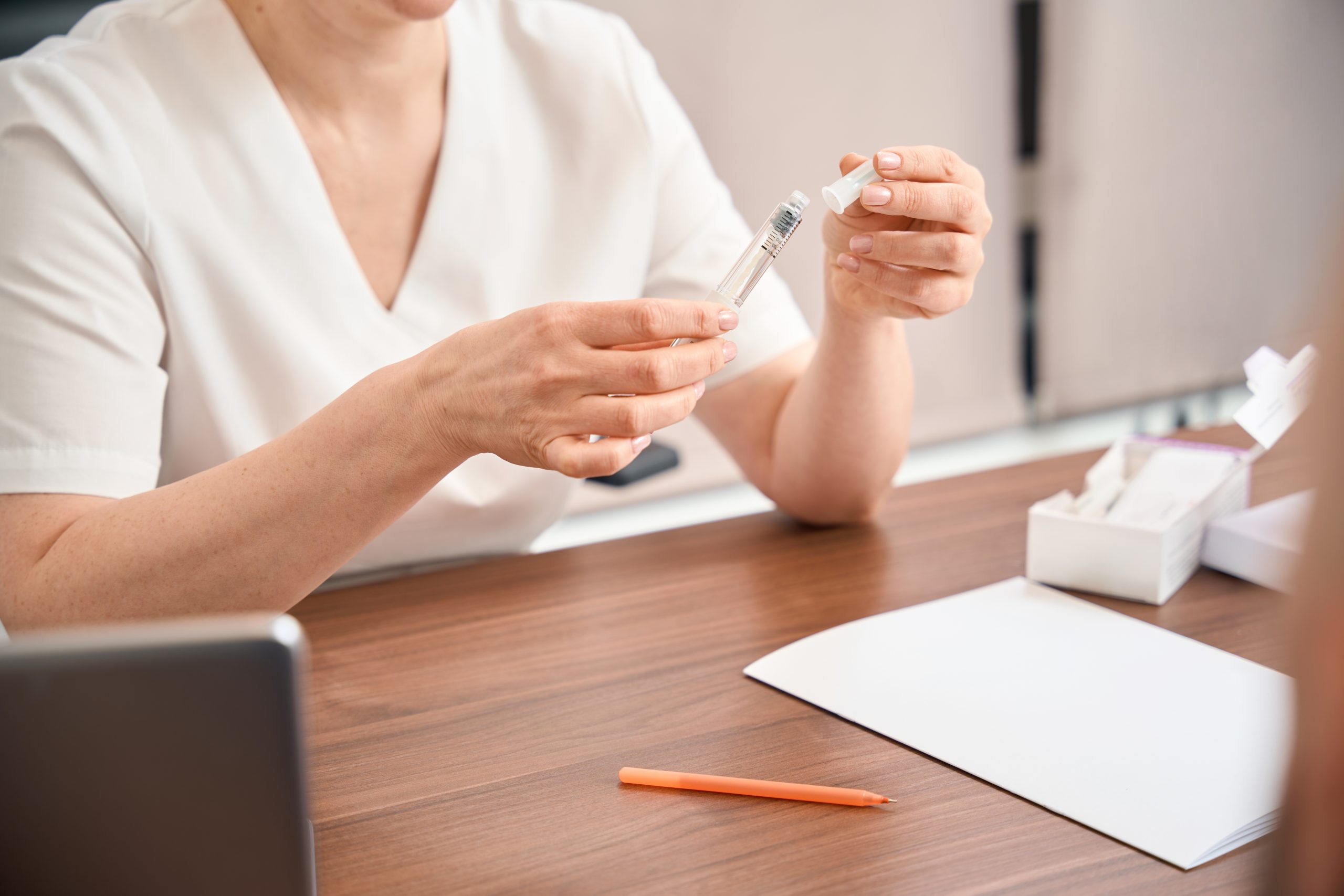
Menopur is a fertility medication commonly used during IVF cycles to help the ovaries develop multiple eggs, increasing the number of eggs available for retrieval.
Unlike some stimulation medications that contain follicle-stimulating hormone (FSH) alone, Menopur provides both FSH and luteinizing hormone (LH) activity.
For IVF to work effectively, ovarian stimulation medications are essential. Under natural conditions, the body typically matures only one egg per cycle, which severely limits IVF success.
Medications with strong follicle-stimulating hormone (FSH) activity, such as Menopur and other gonadotropins (like Gonal-F and Follistim), allow multiple follicles to develop simultaneously, increasing the number of eggs available for retrieval and the overall chances of creating viable embryos.
This article explains what Menopur is, how it works, why its added LH activity may benefit certain patients, when it’s used in IVF, what the research shows, and important safety considerations, including the risk of ovarian hyperstimulation syndrome (OHSS).
What Is Menopur?
Menopur (menotropins for injection) is a form of human menopausal gonadotropin (hMG). It is derived from the urine of postmenopausal women and carefully purified. Each vial contains 75 IU of FSH activity and 75 IU of LH activity, as specified by the FDA
Menopur is FDA-approved for ovarian stimulation in women undergoing assisted reproductive technology (ART), including IVF.
How Menopur Works in IVF
During a natural menstrual cycle, hormones carefully coordinate follicle growth so that typically one egg matures. IVF stimulation intentionally changes that process to allow multiple follicles to develop safely in a single cycle.
Menopur supports this process through two complementary hormonal actions.
FSH Activity
FSH stimulates granulosa cells within ovarian follicles, encouraging follicles to grow and helping eggs progress toward maturity.
LH Activity
LH activity supports hormone production within the follicle and plays a role in later stages of follicle development. For some patients, having LH activity present during stimulation may better mirror natural physiology.
What makes Menopur different from FSH-only medications is that it provides both FSH and LH activity in one medication.
How Menopur Is Used During IVF
Menopur is given as a daily subcutaneous injection during the stimulation phase of IVF. Dosing is individualized and adjusted based on ultrasound monitoring and hormone levels, especially estradiol.
Menopur may be used on its own or combined with recombinant FSH medications, depending on how a person’s ovaries respond and the goals of the treatment plan.
When Menopur Is Used During IVF
Menopur is started early in the stimulation phase of IVF and may be used in several ways depending on the treatment plan. It can serve as the primary stimulation medication or be combined with recombinant FSH to tailor the balance of FSH and LH activity.
Menopur is commonly used alongside GnRH antagonists or agonists to prevent premature ovulation. And it is followed by a trigger medication to induce final egg maturation.
Protocols are adjusted throughout the cycle based on real-time ultrasound and hormone monitoring.
How Doctors Decide Which Stimulation Medications to Use
Choosing ovarian stimulation medications is one of the most individualized parts of IVF care.
Providers consider factors such as:
- age
- ovarian reserve testing
- prior response to stimulation medications
- diagnosis, and overall treatment goals
While all effective IVF cycles require strong FSH activity to support the development of multiple follicles, the decision to include LH activity, through medications like Menopur, is based on how a patient’s ovaries are expected to respond.
Rather than a one-size-fits-all approach, stimulation protocols are adjusted to balance safety, egg yield, and embryo potential for each individual cycle.
What the Research Shows
Much of the research on Menopur compares human menopausal gonadotropins (hMG) with recombinant FSH (rFSH) in IVF cycles.
hMG Compared with Recombinant FSH
Cochrane reviews evaluating hMG versus recombinant FSH in IVF and ICSI cycles have found no clear difference in ongoing pregnancy or live birth rates at the population level.
These findings support the idea that medication choice is often less about one option being universally “better” and more about matching the protocol to the individual patient.
When Might LH Activity Matter?
Research on LH supplementation suggests that some patients may benefit from LH activity, particularly those with advanced reproductive age, diminished ovarian reserve, or a suboptimal response to FSH-only stimulation. Results are mixed, and patient selection is important.
Because Menopur includes LH activity intrinsically, it is sometimes chosen when a protocol is designed to include LH without adding a separate medication.
Who May Benefit from Menopur?
Menopur may be considered for patients such as:
- People with diminished ovarian reserve
- People of advanced reproductive age
- Those who had a lower-than-expected response to FSH-only stimulation in prior cycles
- Patients whose provider feels LH activity may support follicular development
There is no single “right” medication for everyone.
Risks and Side Effects
Menopur is generally well-tolerated. Common side effects may include
- injection-site irritation
- bloating
- abdominal discomfort
- headache
- mood changes
As with all ovarian stimulation medications, the most clinically significant risk is ovarian hyperstimulation syndrome (OHSS), particularly in patients with a high ovarian reserve or PCOS.
ASRM guidance emphasizes prevention through individualized dosing, careful monitoring, and trigger selection.
Limitations of Menopur
Menopur plays an important role in stimulation, but it cannot:
- Improve intrinsic egg quality
- Reverse age-related fertility decline
- Guarantee embryo development or pregnancy
- Replace other critical parts of IVF care, such as lab quality and uterine evaluation
Its role is specific to ovarian stimulation within a broader treatment plan.
Cost and Access Considerations
Menopur can be expensive, and insurance coverage varies widely.
Some patients choose between Menopur and other gonadotropins based on cost, pharmacy access, or prior response rather than differences in effectiveness.
Menopur Alternatives
Menopur is one way to provide both FSH and LH activity during IVF stimulation, but it is not the only option.
In some protocols, LH activity can be supplied through alternative approaches depending on patient response, provider preference, and cost considerations.
One commonly used alternative is combining a recombinant FSH medication, such as Follistim or Gonal-F, with low-dose (micro-dose) human chorionic gonadotropin (hCG). hCG acts on the same receptor as LH and can provide LH-like activity during stimulation at a lower cost.
This approach may be particularly helpful for patients who would benefit from LH activity but need a more cost-effective protocol.
As with Menopur, the decision to use alternative sources of LH activity is individualized and based on ovarian reserve, prior cycle response, hormone levels, and safety considerations. No single approach is universally superior, and protocols are adjusted throughout the cycle based on monitoring results.
FAQ
Is Menopur better than Follistim or Gonal-F?
Menopur is not universally better. The key difference is that Menopur provides both FSH and LH activity, while Follistim and Gonal-F provide FSH only. Some patients benefit from LH activity, while others do not need it.
Can Menopur and FSH-only medications be used together?
Yes. Many IVF protocols combine Menopur with recombinant FSH to tailor the balance of FSH and LH activity based on ovarian response.
Does Menopur improve egg quality?
Menopur can increase the number of follicles stimulated, but it does not change intrinsic egg quality, which is primarily influenced by age and biology.
Is Menopur safe?
Menopur has a long history of use in IVF when prescribed and monitored appropriately. Managing OHSS risk through personalized protocols is the primary safety focus.
Menopur for IVF: Key Takeaways
Menopur is a gonadotropin used during IVF stimulation that provides both FSH and LH activity to support the development of multiple ovarian follicles.
Strong FSH activity is essential for effective IVF stimulation, as it allows more than one egg to mature in a single cycle and improves the chances of creating viable embryos.
Menopur is a well-established medication and is included in many IVF protocols, particularly when LH activity is felt to support ovarian response or better match a patient’s individual physiology.
Large studies show IVF outcomes with Menopur are comparable to those achieved with FSH-only medications for many patients.
The choice to use Menopur, or an alternative source of LH activity, is based on individual factors such as age, ovarian reserve, prior response to stimulation, and real-time monitoring during the cycle.
Careful dosing and monitoring help optimize results while minimizing risks such as ovarian hyperstimulation syndrome (OHSS).