Can You Get Pregnant After a Tubal Ligation? Chances and Options

Yes, it is possible to get pregnant after a tubal ligation. And it is far more achievable than many people have been led to believe.
Tubal ligation is often described as “permanent,” which can make future pregnancy feel impossible. But modern fertility care has revolutionized what is possible. Today, there are two effective and widely used ways to get pregnant after having your tubes tied:
In rare cases, pregnancy can also happen spontaneously, but this is uncommon, unpredictable, and not something to rely on.
This article explains how pregnancy is possible after tubal ligation, why most people choose IVF or reversal, and how to decide which option may give you the best chance of success.
What Does It Mean to Have Your Tubes Tied?
A tubal ligation is a form of permanent birth control in which the fallopian tubes are cut, sealed, clipped, or cauterized to prevent sperm from reaching the egg.
Because fertilization normally occurs in the fallopian tubes, tubal ligation prevents natural conception. However, it does not prevent pregnancy if the tubes are bypassed with IVF or surgically reconnected.
How Can Pregnancy Happen After a Tubal Ligation?
There are three possible ways pregnancy can occur after tubal ligation:
|
Path to pregnancy |
What it means |
Typical takeaway |
|
Spontaneous pregnancy |
Pregnancy occurs without IVF or reversal |
Rare and unpredictable |
|
IVF |
Eggs are fertilized in a lab and placed into the uterus |
Most common and reliable option |
|
Tubal ligation reversal |
Surgery reconnects the tubes so sperm and egg can meet |
Effective for selected patients |
For people actively trying to conceive, IVF and tubal ligation reversal are the realistic options.
Most People Choose IVF or tubal ligation reversal
If you want to get pregnant after having your tubes tied, the vast majority of patients pursue IVF or tubal ligation reversal rather than waiting for a spontaneous pregnancy.
Natural pregnancy after tubal ligation does occur, but it is not a fertility strategy and carries a higher risk of ectopic pregnancy.
Choosing between IVF and tubal ligation reversal depends on age, tubal damage, sperm quality, family-building goals, and how quickly you want to become pregnant.
Can You Get Pregnant Naturally After a Tubal Ligation?
Yes, but it is uncommon.
Large long-term studies show that a small percentage of people become pregnant years after tubal sterilization due to failure of the original procedure. In the U.S. Collaborative Review of Sterilization (CREST), about 1–3% of women experienced pregnancy over a 10-year period, depending on how their tubes were blocked.
Importantly, pregnancies that occur after tubal ligation have a higher risk of being ectopic, which can be dangerous and requires urgent medical care.
If you have pregnancy symptoms after a tubal ligation, take a pregnancy test promptly and seek medical evaluation right away. This risk exists even many years after the procedure.
Because of this unpredictability and safety concern, natural pregnancy should be viewed as a background risk, not a plan.
IVF After Tubal Ligation
How IVF Works
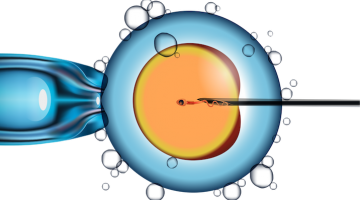
IVF bypasses the fallopian tubes entirely
Eggs are retrieved from the ovaries, fertilized in a lab, and one or more embryos are transferred directly into the uterus. Because the tubes are not involved, IVF works even if they were removed or severely damaged.
IVF is often the first-line option after tubal ligation, especially when:
- Tubes were extensively cauterized or removed
- Age makes time to pregnancy important
- There is male factor infertility
- Predictable timing matters
IVF Success After Tubal Ligation
IVF success depends primarily on:
- Age
- Ovarian reserve
- Egg and embryo quality
- Sperm quality
- Whether donor eggs are used
Tubal ligation itself does not reduce IVF success rates.
For the most reliable national benchmarks, SART publishes outcome tables by age group.
Why Semen Analysis Matters
Even if you have been pregnant before, sperm quality can change over time.
- Is the sole cause in about 20% of couples
- Contributes in another 30%
If sperm count or motility is reduced, IVF (often with ICSI) is usually favored because it does not rely on sperm traveling through the reproductive tract.
This is why a semen analysis is a smart first step before deciding between IVF and reversal.
Tubal Ligation Reversal
How Tubal Ligation Reversal Works
A tubal ligation reversal (tubal reanastomosis) is a surgical procedure that reconnects the healthy ends of the fallopian tubes so fertilization can occur naturally again.
The blocked or damaged segment is removed, and the remaining portions are carefully rejoined.
Success depends heavily on:
- The length of healthy tube remaining
- Whether the fimbriae are intact
- The original ligation method (clips or rings are more favorable than extensive cautery)
Tubal Reversal Success Rates
Across modern studies, pregnancy rates after tubal reversal commonly range from 40% to 80%, depending on age and surgical factors.
At CNY Fertility, Dr. Robert Kiltz advises:
“As long as there is sufficient length of the fallopian tube to reconnect the ends and the tubes are functioning properly, we anticipate a 60 to 80% chance of patients conceiving naturally within two years of their reversals if under age 35.”
Ectopic Pregnancy Risk After Reversal
Ectopic pregnancy risk is higher after tubal reversal than in the general population, typically reported in the single-digit percentages, depending on surgical technique and patient factors.
Early pregnancy monitoring is essential after a positive test.
IVF vs Tubal Reversal: Which Is Better?
According to the American Society for Reproductive Medicine (ASRM), IVF often has a higher per-cycle pregnancy rate, while tubal reversal can offer a higher cumulative pregnancy rate over time for carefully selected patients.
|
Consideration |
IVF may be better |
Reversal may be better |
|
Age |
Older or time-sensitive |
Younger |
|
Tubal damage |
Extensive cautery or removal |
Clips or rings |
|
Sperm quality |
Abnormal or ICSI needed |
Normal |
|
Family goals |
One child or predictable timing |
Multiple children |
|
Risk tolerance |
Prefer bypassing tubal risk |
Accept ectopic monitoring |
Cost Considerations
IVF at CNY Fertility
Comprehensive IVF packages start at $6,300 with standard medications.
Nationally, IVF often exceeds $23,000 per cycle.
Tubal Reversal at CNY Fertility
Tubal ligation reversal starts at $4,995, including anesthesia, surgical services, and facility fees.
Patients who undergo reversal at CNY may qualify for a discounted IVF cycle if reversal is unsuccessful (program details vary).
Frequently Asked Questions
Can you get pregnant after a tubal ligation?
Yes. Pregnancy is possible through IVF or tubal reversal, and rarely on its own.
Can you get pregnant years later?
Yes. The risk of pregnancy persists for years after tubal ligation.
Is IVF better than tubal reversal?
It depends on age, tubal damage, sperm quality, family goals, and how quickly you want to conceive.
What should I do first?
A fertility consultation with ovarian reserve testing and a semen analysis helps identify the option with the highest chance of success.
Next Steps
Many people who want to get pregnant after tubal ligation are older, which makes time an important factor. A personalized evaluation can help determine whether IVF or tubal ligation reversal is the safest and most effective path forward.
CNY Fertility can review your medical history, testing, and goals to help you choose the option that best fits your situation.