Weight and Fertility: How Low BMI and Obesity Affect Fertility


Body mass index (BMI) and weight are used in many clinics as markers of fertility and are used as a means to reject specific patients (both men and women) from treatment.
At CNY Fertility, we believe denying treatment based on BMI is both discriminatory and unjust. Research does exist that shows women with extremely low or high BMI may have a lower chance of conceiving naturally or with fertility treatment, but the data isn’t absolute.
In addition, other lifestyle factors such as smoking, alcohol consumption, and stress are known to negatively impact fertility. Still, at CNY, these factors are never used to deny patients treatment.
At CNY Fertility, we believe in treating the whole person! We educate all patients, both male and female, on healthy lifestyle changes that will increase their chances of conceiving. It is our mission.
In this article, we’ll explore the available research behind BMI and its influence on fertility to provide you with the information you need to have an informed conversation with your fertility specialist.
How BMI, Weight, and Obesity May Affect Fertility
While many studies correlate BMI with difficulty conceiving, the experts at CNY firmly believe that it is not BMI alone that causes these adverse effects. Rather. It is dietary and other lifestyle behaviors that, in the long term, lead to weight issues, insulin resistance, and a potential for fertility issues.
Fortunately, lifestyle changes have near-immediate biochemical impacts, so making simple changes can increase your fertility much more quickly than weight loss alone.
Female BMI and Fertility
Some research indicates that too high or too low a BMI can negatively impact fertility. If you are overweight or your BMI is at one extreme or the other, many fertility clinics may deny treatment until a “normal” BMI is achieved. At CNY you will never be denied treatment based on BMI.
An extremely low BMI or obesity is associated with the following symptoms known to affect fertility:
- lower pregnancy rates
- Recurrent pregnancy loss
- lower fertility treatment success rates
- hormonal imbalances
BMI and Pregnancy Health
In addition to affecting a woman’s ability to get pregnant, extremely low or high BMI can also cause complications during pregnancy.
Women with extremely high BMI are at a greater risk for the following:
- cesarean birth
Women with extremely low BMI are at risk for the following:
- low birth weight
Male BMI, Obesity, and Fertility
Research indicates that male fertility is also affected by BMI.
Men who have a high BMI or underweight may experience the following
- sexual dysfunction
Female BMI and Getting Pregnant Naturally
The two main ways that BMI negatively affects fertility are via menstrual and ovulatory disorders.
Research has shown that the risk of infertility is increased by 27% for women of childbearing age who are overweight (BMI 25 – 30) compared to women of normal weight (BMI 18.5-25). Women who are obese (BMI <30), are 78% more likely to experience infertility.
Menstrual and ovulatory disorders can be treated by making lifestyle changes like incorporating daily movement, eating a fertility diet, and taking supplements.
These changes can help to return spontaneous ovulation, improve the odds of conception, and increase pregnancy rates.
Also, fertility medications like Clomid and Letrozole can be used to improve ovulation and increase the chances of a successful pregnancy.
BMI, Weight, Obesity, and Fertility Treatment
Recent studies and meta-analyses have discovered that being overweight has adverse effects on fertility treatment success.
During treatment, overweight or obese women are more likely to experience a low response to ovarian stimulation medications, reduced oocyte retrieval, and poor quality of oocytes and embryos. These factors influence fertility treatment success and help to explain why women with higher BMI experience lower success rates with fertility treatments.
Just because success rates are lower and women with higher BMI may experience more difficulties while trying to conceive, that does not mean they should not be able to seek treatment.
Why You Should Not Delay Treatment to Lose Weight
Some clinics may deny treatment until you are at an “ideal weight. However, statistics indicate that losing significant amounts of weight can take multiple years, and age likely has a much greater impact on fertility than weight.
As women get older, their chances of getting pregnant decrease due to several factors, with the greatest impact being a decreased number of eggs (ovarian reserve) and reduced quality of eggs (increased number of chromosomally abnormal eggs).
Anti-Müllerian Hormone (AMH) levels are a strong indicator of a woman’s ovarian reserve. As displayed in the figure below, women’s AMH levels decrease with age:

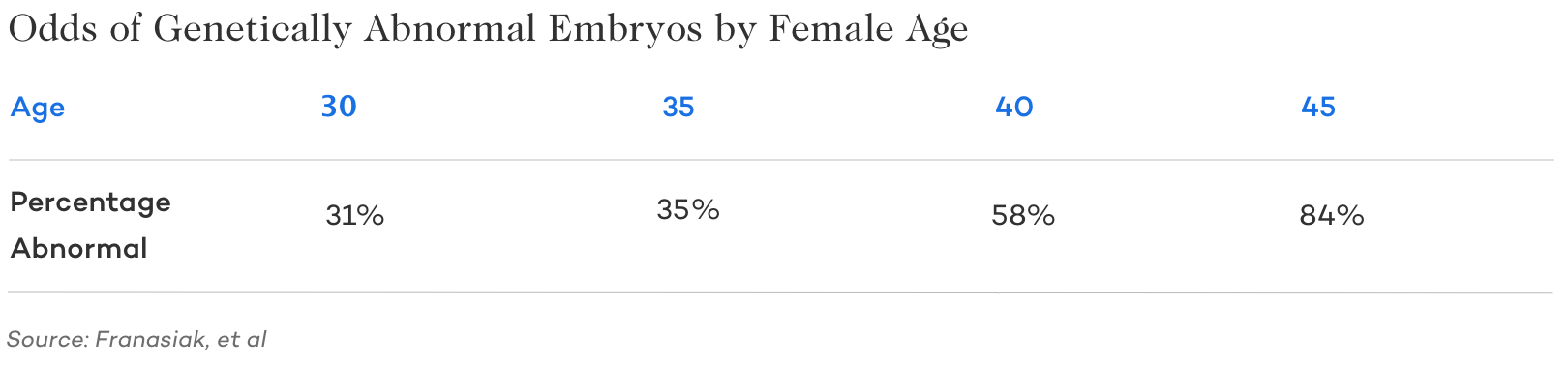
As mentioned above, a woman’s egg quality decreases with age. Since older women produce more chromosomally abnormal eggs, they produce more chromosomally abnormal embryos.
As mentioned above, a woman’s chances of getting pregnant each month decrease with age. As shown in the figure below, her odds of conceiving decline most sharply between the ages of 35 and 40.
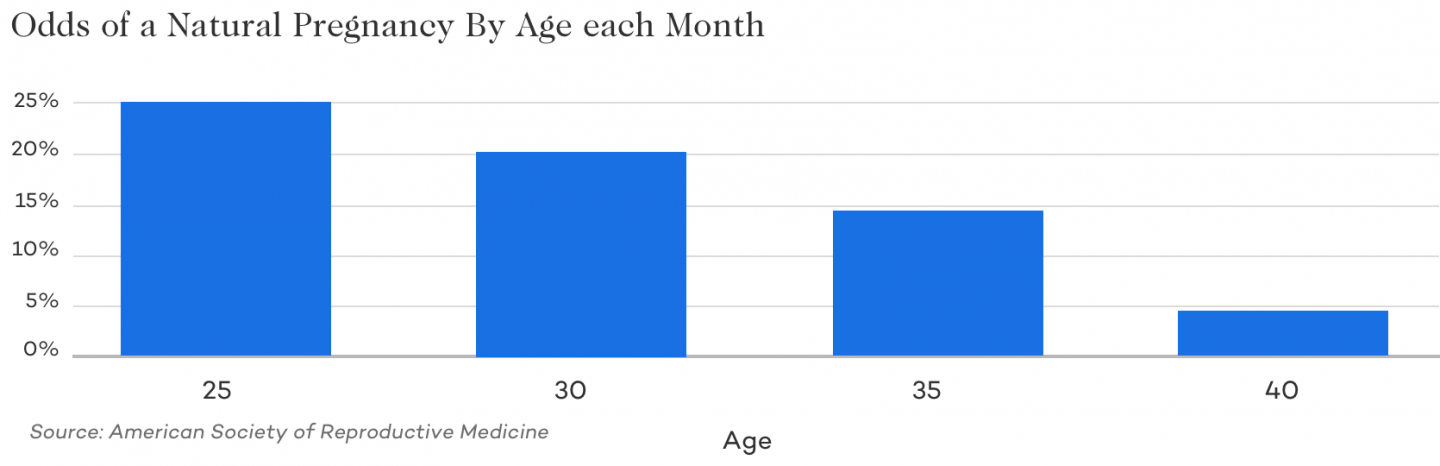
As shown in the figure above, advanced maternal age decreases the likelihood of having a baby. In most cases, waiting until you reach a “normal” BMI will further decrease the chances of conceiving. At CNY Fertility, we focus on improving overall health and wellness, including weight loss, while allowing patients to proceed with fertility treatment.
What Really Matters – Other Factors Affecting Fertility other than BMI
Weight is merely a symptom of genetics, as well as a diet and lifestyle that leads to abnormal BMIs. By making the necessary lifestyle changes to improve your overall health, you can significantly increase your odds of a successful pregnancy.
Inflammation is widespread in women with higher BMI and is known to impact fertility negatively. Infertility and inflammation are highly associated, and numerous infertility diagnoses are intimately related to inflammation, including PCOS, endometriosis, pelvic inflammatory disease, and recurrent pregnancy loss.
Inflammation can also negatively affect fertility outcomes. For many patients, infertility caused by inflammation will be diagnosed as unexplained infertility.
At CNY Fertility, our reproductive endocrinologists are experts in reproductive immunology. They focus on how the immune system and inflammation affect fertility. As a result, our team is well-equipped to recommend appropriate strategies and simple day-to-day changes that can help reduce inflammation and improve your chances of getting pregnant.
Polycystic Ovary Syndrome (PCOS)
PCOS is one of the most common causes of infertility, and it is the most common cause of anovulatory infertility, affecting 4-18% of reproductive-aged women. Many women don’t know then have PCOS until they seek fertility treatment, and high BMI or obesity is fairly common in women with PCOS (40-80% of women with PCOS are obese).
PCOS is also associated with higher BMI, and the hormonal disturbances that make it very easy to put on weight and very difficult to lose weight.
The exact cause of PCOS is difficult to pinpoint, but fertility specialists believe it is a combination of factors, including genetics, health, and lifestyle. Since PCOS is so common, it has been heavily researched and several treatment options are available. As such, getting pregnant with PCOS is very possible with the use of medications to assist in follicular growth and ovulation.
The lifestyle changes listed below can help to improve PCOS symptoms and natural fertility.
Nutritional Deficiencies
Many women with extremely low or high BMI experience nutritional deficiencies as a result of their diet. Many nutritional deficiencies are associated with both male and female infertility.
For example, vitamin D deficiency is associated with a decrease in female fertility and complications like PCOS, endometriosis, and uterine fibroids.
In men, vitamin D deficiency is associated with reduced sperm production, impaired motility, lower testosterone levels, and lower overall sperm quality.
Vitamin D deficiency can be corrected through dietary changes and by taking vitamin D/fertility supplements.
Improving Health Before Pregnancy
Losing or gaining weight isn’t the only way to improve fertility. As mentioned above, abnormal weight is a symptom, not a disease. Treating the underlying conditions contributing to your low/high BMI is equally, if not more, important for increasing your chances of conception.
Check out some strategies to naturally improve your health before or while trying to get pregnant below.
Light exercise (Yoga, Walking, etc.)
The benefits of exercise for fertility and overall health are well-documented. Exercise improves circulation, which delivers more nutrient-rich blood to the reproductive organs. Exercise also helps reduce stress and balance your immune system. The immune system is believed to be one of the chief causes of “unexplained fertility” as it is responsible for the body’s inflammatory response At CNY Fertility, we recommend incorporating low-intensity movement like stretching, walking, and yoga into your daily routine to get your body in motion.
For women, exercise can help to improve menstrual cycle regularity and ovulation.
For men, exercise is associated with higher testosterone levels and better semen parameters.
Dietary Changes and Supplements
Making dietary changes shouldn’t just be about losing or gaining weight, especially when you are trying to get pregnant. Eating a fertility diet can help reduce inflammation and provide your body with the nutrients it needs to support a healthy pregnancy.
At CNY Fertility, we recommend a high-fat, moderate-protein, low-to-no-carbohydrate diet, nicknamed the B.E.B.B.I. diet. Diet (Bacon, Eggs, Butter, Beef, and Ice cream made from full-fat heavy cream with little sugar).
Fat is the key element of fertility. It provides essential building blocks for our cells and helps synthesize vital reproductive hormones. Dietary fat provides our bodies with energy and essential fatty acids that we can’t produce on our own. Fat also enables our bodies to absorb essential vitamins like A, D, and E, which all increase fertility. The most important benefit of eating fat for fertility is that it helps to reduce inflammation.
Fat has commonly been associated with obesity, but new research suggests that carbohydrates are also contributing factors. Carbohydrates cause many chronic conditions and elevated blood sugar levels, which lead to advanced glycation and other inflammatory responses. In addition to causing inflammation, large amounts of carbohydrates can also affect reproductive hormone levels.
Some nutrients aren’t easily obtained through diet alone, and when trying to get pregnant, it is important to ensure sufficient levels of a wide array of nutrients. We recommend taking fertility supplements to support your diet and ensure your body has everything it needs to produce healthy sperm and eggs and to support a healthy pregnancy.
Reducing Stress
Low and high BMI have both been associated with higher levels of stress.
Unfortunately, stress can impact fertility, and an infertility diagnosis can also increase stress.
Recently, studies have emerged linking a woman’s day-to-day stress levels with reduced chances of getting pregnant. [referencesPending link=”Lifestyle factors in people seeking infertility treatment – A review” text=”Lifestyle factors in people seeking infertility treatment – A review”/]
Research indicates that stress also negatively impacts male fertility. Studies have found that stress reduces the production of luteinizing hormone (LH) and testosterone, which causes complications in spermatogenesis, resulting in reduced sperm quality.
Light exercise and yoga are two proven ways to reduce cortisol levels, the stress hormone. Relaxation techniques such as meditation, deep breathing, and mindfulness have also been shown to reduce stress. In extreme cases, your fertility specialist may recommend professional psychological intervention. Studies have found that psychosocial interventions focused on eliminating stress can help improve psychological outcomes, relationships, and pregnancy rates among infertile couples.
Stopping Smoking
Smoking is known to negatively affect nearly every aspect of one’s health, including fertility. For women, smoking decreases ovarian reserve, causes premature ovarian aging, and can have severe effects on the health and development of the baby. The good news is that research shows women can significantly improve their chances of getting pregnant by quitting smoking one year prior to trying to conceive.
In a large study of 1,700 men, researchers measured the effects of smoking on men’s sperm density, count, and motility.
Sperm Density | Sperm Count | Sperm Motility |
-15.3% | -17.5% | -16.6% |
As displayed above, smokers had significantly worse results across all three categories when compared to non-smokers. We highly recommend stopping smoking to increase your fertility.
Reducing Inflammation
Omega-3 Fatty Acids have been shown to reduce inflammation greatly and are another recommended strategy for increasing fat intake
Acupuncture and Massage: Two of the best ways to reduce inflammation specific to fertility are through acupuncture and fertility massage.
In addition to reducing inflammation, acupuncture provides numerous other benefits for fertility, including increasing blood flow, reducing stress, and normalizing hormone production. . Research shows that acupuncture has a positive effect and no adverse effects on pregnancy outcomes. Fertility massages provide similar benefits for improving fertility and also help to prepare the body for pregnancy.
Reducing Alcohol Consumption: One final way to decrease inflammation and improve your fertility is to reduce alcohol consumption. Similar to smoking, alcohol and fertility aren’t a great mix.
The occasional beer or glass of wine may not hurt, but as consumption increases, research shows that fertility declines. In addition, alcohol can cause hormonal imbalances, ovulatory issues, decreased sexual function, and impaired semen quality.
Heavy alcohol intake is highly associated with chronic inflammation.
Ethical Issues of Denying Treatment Based on Weight and BMI
At CNY Fertility, we pride ourselves on providing access to high-quality, affordable fertility care for all who need it.
We strongly feel that denying anyone treatment based on their weight is discriminatory and unfair. Other clinics may deny patients treatment based on BMI because, as weight increases, fertility success rates go down, but at no point do those success rates equal zero! Strict weight or BMI guidelines may be an efficient way to artificially boost your success rates, but at CNY, we believe it is unethical.
Patients with high levels of stress have a statistically lower chance of getting pregnant; should we deny them treatment, too?
BMI (exceptionally high) is associated with bias among many healthcare professionals across all specialties. We feel that refusing to accept or treat patients who are within the scope of safe practice solely based on an arbitrary BMI restriction is simply wrong.
Final Words on BMI and Fertility
Body mass index (BMI) should never be used as the sole reason to deny patients treatment, especially if they are medically healthy enough to carry a baby. High and low BMI patients may be at a greater risk for infertility, but so are many other populations of people who aren’t discriminated against. BMI is easily observable; therefore, some clinics may jump to restrictive conclusions before providing patients with a fair and complete workup.
As mentioned in this article, many other factors contribute to fertility than weight alone. When we focus on improving those factors, the chances of getting pregnant increase greatly.
If you have experienced any bias in your fertility care or have been denied care entirely, we encourage you to fill out our online consultation form and speak with one of our fertility care providers about your options. We would love to assist you on your fertility journey.