Top Quality Fertility
Care for 1/3 the Cost
CNY Fertility is the family-building partner you’ve been looking for. A trusted team of fertility specialists, a national network of clinics, a patient-friendly travel program, affordable pricing, in-house payment plans, and 60,000+ lives changed forever.
Family Building Guide Schedule ConsultOur Mission in Action
We believe having a family is a basic human right so we’ve been making high-quality fertility care accessible to everyone since 1997.
Affordable
We charge approximately 1/3 the national average for most major fertility treatments. We offer financing to EVERYONE. No credit checks, no problems.
Access
We believe everyone has the reproductive right to the fertility care they need. While many clinics restrict treatment options due to age, BMI, and FSH/AMH levels, we accept everyone. True success is found only in helping everyone.
Quality
Our providers have over 250 years of combined fertility experience, have helped create over 30,000 lives, speak internationally on improving treatment outcomes, and lead a team dedicated to tailoring a treatment plan focused on YOU.


Trying to Conceive & Carry
Fertility Treatments
Our fertility clinics offer the whole range of fertility treatments to ensure everyone has access to the care they need. Whether it’s IUI, IVF, Donor Eggs, Egg Freezing, Reproductive Immunology, or any number of other treatments, your care will be guided by a team of providers with over 250 years of combined fertility care expertise and innovation.

Intrauterine Insemination
An introductory treatment where sperm is cleaned, concentrated and deposited into the uterus using a catheter.

In Vitro Fertilization
The female’s eggs are removed from the ovaries, fertilized and grown in a lab, and placed back into the woman’s uterus. The gold standard of reproductive medicine. +Learn more

Donor Egg & Sperm
Donor Eggs and Sperm are used for many reasons and give the parents to be pregnancy odds of the healthy and fertile donors themselves. Can be used in combination with many treatments.

Egg Freezing
The process of harvesting and freezing eggs. Done to preserve one’s fertility prior to chemotherapy (or other fertility damaging medical treatments), transitioning, or those simply hoping to expand their family later in life.

Genetic Testing
Genetic Testing enables parents to be to choose embryos with the correct number of chromosomes and select embryos not effected by known genetic diseases.

Tubal Reversal
A procedure done to reverse a tubal ligation (by reconnecting their tubes) thus restoring a woman’s fertility.

Vasectomy Reversal
A surgical procedure done to reverse a previous vasectomy and restore a man’s fertility.
Mini IVF
In Vitro Fertilization that uses less medications and thus (usually) makes fewer eggs and costs less money.

INVOcell
INVOcell is a fertilization alternative to traditional IVF and ICSI that allows fertilization and early embryonic development to happen “inside” the woman’s body. Sperm and eggs are placed inside a small device, inserted and left in a woman’s vagina for a few days.
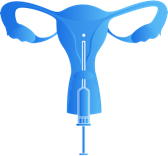
Frozen Embryo Transfer
A Frozen Embryo Transfer is the process of taking a frozen embryo that was cryopreserved from a previous IVF cycle, thawed, and transferred into a woman’s uterus.

Sperm freezing
The process of collecting, cleaning, concentrating and freezing sperm in liquid nitrogen.

Gender Selection
A “treatment” or service that can be done using IVF with PGT-A genetic testing to choose the biological sex of your future baby.

Reciprocal IVF
A variation of IVF for lesbian couples and transgender men that allows both partners to be intimately involved in the child creation process. One partner’s eggs the other partner’s womb!
Intrauterine Insemination
An introductory treatment where sperm is cleaned, concentrated and deposited into the uterus using a catheter.
In Vitro Fertilization
The female’s eggs are removed from the ovaries, fertilized and grown in a lab, and placed back into the woman’s uterus. The gold standard of reproductive medicine. +Learn more
Donor Egg & Sperm
Donor Eggs and Sperm are used for many reasons and give the parents to be pregnancy odds of the healthy and fertile donors themselves. Can be used in combination with many treatments.
Egg Freezing
The process of harvesting and freezing eggs. Done to preserve one’s fertility prior to chemotherapy (or other fertility damaging medical treatments), transitioning, or those simply hoping to expand their family later in life.
Genetic Testing
Genetic Testing enables parents to be to choose embryos with the correct number of chromosomes and select embryos not effected by known genetic diseases.
Tubal Reversal
A procedure done to reverse a tubal ligation (by reconnecting their tubes) thus restoring a woman’s fertility.
Vasectomy Reversal
A surgical procedure done to reverse a previous vasectomy and restore a man’s fertility.
Mini IVF
In Vitro Fertilization that uses less medications and thus (usually) makes fewer eggs and costs less money.
INVOcell
INVOcell is a fertilization alternative to traditional IVF and ICSI that allows fertilization and early embryonic development to happen “inside” the woman’s body. Sperm and eggs are placed inside a small device, inserted and left in a woman’s vagina for a few days.
Frozen Embryo Transfer
A Frozen Embryo Transfer is the process of taking a frozen embryo that was cryopreserved from a previous IVF cycle, thawed, and transferred into a woman’s uterus.
Sperm freezing
The process of collecting, cleaning, concentrating and freezing sperm in liquid nitrogen.
Gender Selection
A “treatment” or service that can be done using IVF with PGT-A genetic testing to choose the biological sex of your future baby.
Reciprocal IVF
A variation of IVF for lesbian couples and transgender men that allows both partners to be intimately involved in the child creation process. One partner’s eggs the other partner’s womb!
Making Priceless Affordable®
The unfortunate truth is that costs remain the number one barrier to accessing fertility care. While some states and employers offer great insurance coverage, others don’t. That means for many, the cost of IUI, IVF, Donor Eggs, Egg Freezing, Tubal Reversals, and other treatments remains a significant factor in determining their treatment course. That’s not right, and we’re doing something about it.
Insurance
We work with dozens of insurance companies and hundreds of plans to ensure you get the most out of your benefits.
Treatment Pricing
Our treatment prices are approximately 1/3 the national average. If your insurance doesn’t cover your treatment, we make it possible for you to pursue the care you need.
Payment Plans
Our in-house payment plans allow everyone to finance their fertility treatment with just 25% down. No credit check, no problems.
Refund Program
Our refund program gives you 6 cycles (for the cost of 1 cycle at many clinics) with a 75% refund if you don’t walk away with a baby. That’s the Fertile Guarantee™.



Fertility Care from Anywhere
Traveling for Treatment
Whether you live near one of our eight fertility clinics, a few states away, or the other side of the globe, we are here to help you. In fact, over 60% of our patients come from states where we have no offices. We partner with your local OBGYN, radiology/imaging facilities, or fertility clinic, so you only need to travel to one of our offices for 2-7 days.
Our Locations Traveling for TreatmentCaring for You
Above & Beyond
While the medical side of your care will always be led by a team of board-certified reproductive endocrinologists and other fertility specialists, the emotions and stress that arise during infertility are very real and can be equally difficult to navigate.
At CNY, we believe that proper education and care for your emotional well-being can be as important as treating your infertility. We understand that each couple’s experience is different and we are here for you in every way imaginable with a multitude of support channels and groups.
More about us
The Making of Juliana - 4:34
The Hackett's Story - 4:07
Melissa's Story - 6:05
Danielle and Tim's Story - 2:17
Katie's Story - 10:36
Melissa's Family Building Journey - 4:26
Laura's Story - 5:10
Christine's Story - 5:29
Darman and Monica's Story - 1:57
CNY Fertility Client Testimonials Amanda
Lissa and Levan's Story - 2:19
Susan's Story - 7:49
Shawn & Katie's Story - 4:29
Lara Shares her Journey to Fertility
Susan's Story - 5:16
Andrea and Ron's Story - 6:45
CNY Fertility Client Testimonials Chelsea, Nick & Luca
Amy Shares her Journey to Fertility
Nicole Shares Her Journey to Fertility
Adrienne And Mike's Story - 7:11


The quality of care was far and away the best I’d been treated at any clinic. It’s affordable. It’s convenient. Wayat is everything . . and without CNY I wouldn’t have my son.

The ladies at the front desk knew me by first name really got to know me. The nurses were just amazing to say the least. I was amazed with my experience with Dr. Kiltz and Dr. Corley, they were always so calm and made me feel so comfortable. Our twins were born June 8th and we could not be more in love.

CNY Preserve made it possible for me to freeze my eggs at a time in my life when it otherwise wouldn't have been an option. I am so grateful that it is their mission to make this process affordable. Egg Freezing has allowed me to invest in my future, so that I can invest in myself today. Thank you CNY!

Thank you to CNY for giving us these two miracle babies. It still feels like a dream that our wish of becoming parents is finally coming true. We could not have gotten here without you and the hope you gave us throughout our journey! It was a long journey, but beyond worth it. Thank you thank you thank you!!

At age 41 I found myself single and without having fulfilled my dream of being a mother. I was sad but kept fighting and thankfully found CNY fertility. With their help, I was able to fulfill my dream with donor eggs and sperm.

On November 15th, we transferred a beautiful 4AB embryo and I finally became pregnant with our beautiful little girl who was born August 9th. She is the light of our life, and so special because we worked so hard for her. She will always know what an amazing miracle she is!

Preserving fertility. The True Planned Parenthood. The culture shift. We pursue collegiate level educations, we accumulate debt, and face a divorce rate upwards of 60% today. Reproduction is happening later... but biology is slower to evolve. Freezing preserves chance.

When all hope was gone we got that positive test. This was the only positive test I had throughout the whole journey. My pregnancy was an easy one and on her due date my water broke and we were off to the hospital. She was born a couple of days later and our lives were forever changed.

After 6 failed IUIs and 2 IVFs ending in miscarriage at a different doctor, I felt hopeless when I came to CNY, you gave me my hope back. CNY made my years of devastation worth it.

I have always known I want to be a mom one day. If it wasn’t for CNY’s affordable egg freezing price I would have never been able to freeze my eggs. Everyone at CNY was wonderful! Freezing my eggs was an empowering experience and was one of the best decisions I have made.

Single and at 43 years of age I welcomed my little boy into the world. His midnight cries are welcomed with smiles and a content heart for my home is filled with sweet giggles and endless love! He is my biggest blessing.

When my test showed "PREGNANT" I was over the moon and in complete shock!!! It worked and my dream to become a Mommy is finally coming true :) Thanks to my amazing donor and CNY I am a Mommy now and it feels amazing :)

After being diagnosed with breast cancer at age 26, my first concern was the impact this would have on our dreams of becoming parents. Each member of the staff at CNY treated us with kindness and compassion during some of our worst days. I cannot even begin to express my gratitude!